

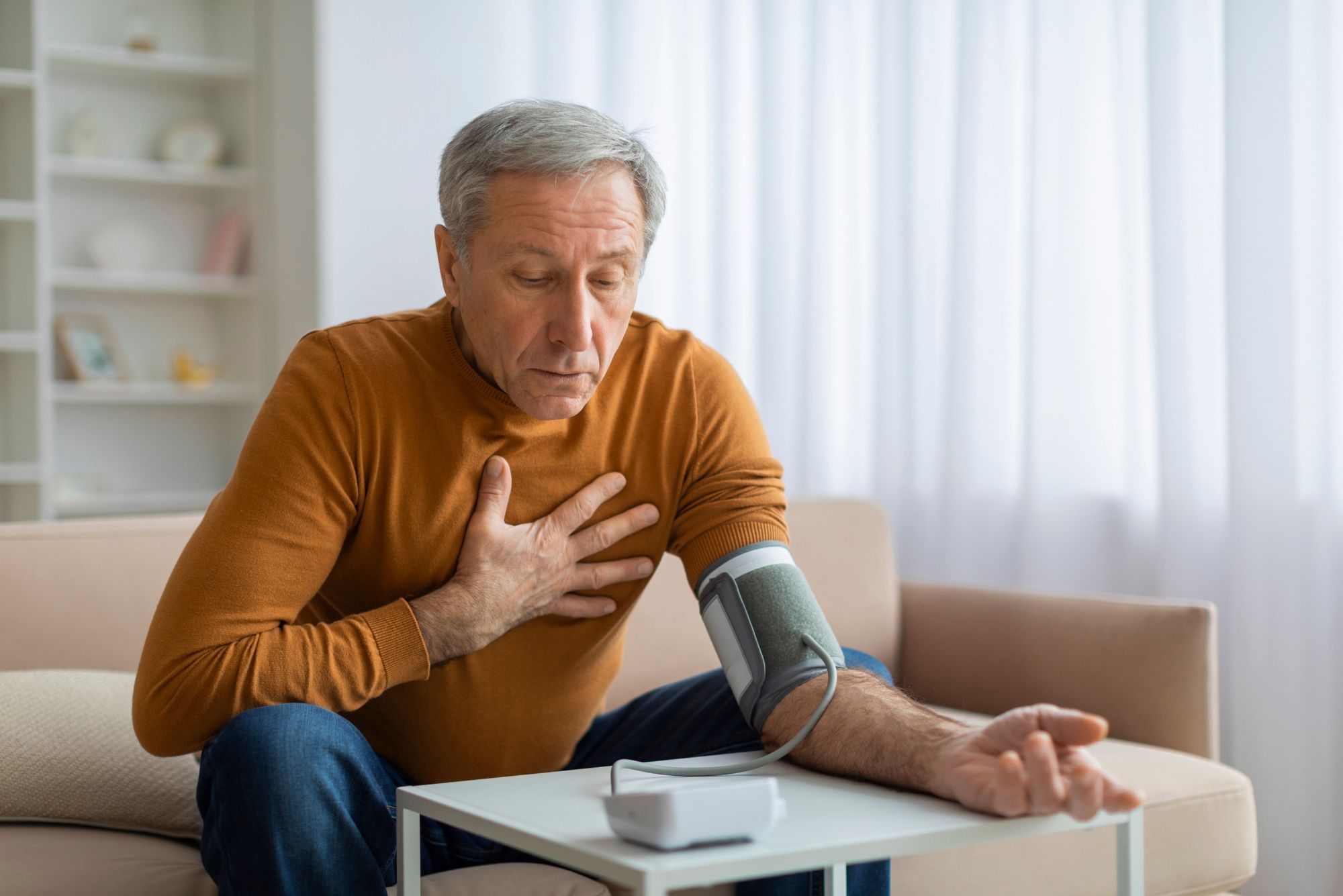
If you’re anxious occasionally, or more than occasionally, you may wonder, “Can anxiety cause high blood pressure?”
High blood pressure is a medical condition known clinically as hypertension. Doctors treat hypertension because a blood pressure above 120/80 is associated with an increased risk of vascular disease, which can damage the heart, brain, kidneys, eyes, or other organs.
In North Carolina, approximately 37.5% of adults have been diagnosed with high blood pressure, though prevalence increases with age, affecting over 71% of adults 60 and older.
But does anxiety cause high blood pressure?
Anxiety and High Blood Pressure: What’s the Link?
Anxiety and high blood pressure don’t necessarily go hand in hand.
It’s true that anxious people may also have hypertension, and spikes in their anxiety levels may cause an acute elevation in blood pressure. But anxiety alone doesn’t result in hypertension.
During an anxiety attack, you may experience a fight-or-flight-type response, a neurologic reaction similar to the hormonal response that occurs with high blood pressure.
But anxiety tends to occur sporadically throughout the day. It’s almost impossible for a person to be in a constant state of anxiety profound enough to trigger such a hormonal response and raise their blood pressure.
In actual cases of high blood pressure, two hormones, adrenaline and cortisol, constrict your blood vessels, increase your heart rate, and intensify the force of your heartbeat. Your kidneys may hold onto more sodium. Combined, these factors increase your blood pressure.
Stress, on the other hand, is different from anxiety. An example is the white-collar office worker with an unreasonable boss and constant deadlines, who is asked to overperform with inadequate resources and who is running nonstop to get the job done.
In those situations, a person’s blood pressure may rise above what it is when they’re relaxing on vacation in the Bahamas. Medical science is studying whether people who often operate under chronic low-level stress may become prone to high blood pressure.
Treating High Blood Pressure
To determine whether a patient’s blood pressure needs treatment, we must first obtain an accurate reading.
But patients with anxiety may exhibit white-coat syndrome; their blood pressure elevates in a doctor’s office because simply visiting the doctor makes them anxious enough to spike their blood pressure when it’s checked.
For this reason, I typically advise at-home blood pressure monitoring. I like to know your blood pressure not just twice a year when you visit my office, but perhaps monthly or every other week.
If your personal monitor is accurate, it’s an optimal way for me to assess your true blood pressure at home, in real life. At-home readings are more informative than in-office readings in helping us decide whether you should take (or continue taking) blood pressure medication or make lifestyle changes to help bring your numbers down.
Monitoring Your Blood Pressure at Home
Here’s how at-home blood pressure monitoring works:
- You purchase a home blood pressure monitor (we can advise you on this) and bring it to my office, where we align it with the office monitor to ensure it’s accurate.
- I recommend how often to measure your blood pressure at home (perhaps a couple of times a week or month, depending on what we’re trying to clarify or uncover).
- Using your monitor, you check your blood pressure at the recommended frequency.
- Once you’ve taken a dozen or so readings, send me your blood pressure log for analysis.
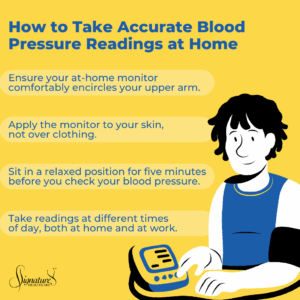
Because many factors can influence your at-home readings, let’s review the proper technique for taking them:
- Ensure your at-home monitor comfortably encircles your upper arm.
- Apply the monitor to your skin, not over clothing.
- Sit in a relaxed position for five minutes before you check your blood pressure. Take your reading when you’re calm and at rest, not chatting or performing other activities.
- Take readings at different times of day, both at home and at work. Tip: If you’re seated at work for several hours and feel stress building, it’s a good time for a blood pressure reading.
Can Anxiety Cause High Blood Pressure Over Time?
Patients often ask, “Does living in a state of chronic anxiety or stress cause sustained high blood pressure over time?”
High blood pressure primarily results from elevated cortisol levels, which stem from chronic low-level stress in some people (though not everyone). If a patient visits me with a high blood pressure of 160/90 and speaks of massive stress at work, I’ll still want to corroborate their in-office BP with a few readings from home and/or work, but we’ll likely need to treat that blood pressure at face value. We begin with lifestyle adjustments; if they’re ineffective, we consider medication.
Don’t believe the misconception that you’ll be stuck on blood pressure medication forever. If your circumstances change and your blood pressure log shows your pressures are back to 105/65, you’ll no longer need the medication, and we’ll stop it.
Anxiety Can Be Controlled
If you’re sometimes anxious, it may be comforting to know you’re not necessarily on the path to high blood pressure.
But some patients exist in a chronic state of worry. Their blood pressure may go up when they visit the doctor’s office, when the dog barks, when the phone rings, or when they think about the dinner they’re attending tomorrow night.
If you find you’re spending much of your life in fight-or-flight mode, we can explore the root of your anxiety and consider treating it with counseling or medications. Beta blockers, for instance, can block adrenaline’s effect on the heart and blood vessels.
Some patients’ hypertension resolves when we treat their anxiety with a selective serotonin reuptake inhibitor (SSRI) or with an occasional benzodiazepine like Ativan or Xanax. For example, if a patient has an atypically elevated blood pressure of 180/100 at home, we may ask them to take a dose of Xanax; if the blood pressure drops significantly, we can perhaps consider long-term strategies to mitigate the anxiety.
For patients who become anxious simply by wearing an arm cuff to monitor their blood pressure at home, we may advise using an ambulatory device. One FDA-approved model can be worn on the chest to deliver a 24-hour snapshot of blood pressure readings. Eventually, wristbands (not yet FDA-approved) will be available to unobtrusively monitor blood pressure over longer periods.
If white-coat syndrome at home is disrupting blood pressure readings, we can order an EKG or an echocardiogram to look for thickening of the heart muscle that can occur with increased pressure. We might also find signs of untreated hypertension through an eye exam or through small amounts of protein in the urine. If signs point to more than transient white-coat syndrome, exams and diagnostics help us explore further.
Special testing can even identify quite rare conditions like excessive adrenaline secretion, the production of too much hormone by a cluster of cells in the adrenal glands. This condition causes symptoms similar to those of anxiety, such as headaches, a racing heart, elevated blood pressure, and hot sweats.
Or, if you wake up in the morning with headaches, feel fatigued all day, and your blood pressure is high, we may find you actually have untreated sleep apnea, a secondary cause of hypertension.
Will Your Anxiety Cause High Blood Pressure? Ask Your Physician
Anxiety is real. For an anxious person, even a conversation about anxiety and blood pressure may be stressful, or they may fear potential side effects of anti-anxiety medication.
Conversely, if a patient is fine with their usual level of anxiety and it doesn’t interfere with their quality of life, they may choose not to treat.
But while chronic low-level stress or anxiety may not directly contribute to high blood pressure, they can cause inadequate sleep, poor diet, and decreased physical activity, all paths to hypertension.
If you believe worry or apprehension affects your quality of life, or you’re still asking yourself, “Does anxiety cause high blood pressure?” it’s a good time to check in with your doctor at Signature Healthcare.
Together, we can discuss how to manage anxiety in a way that’s best for you. Give us a call.
Topics: