


Have you ever had the flu? Would you know if you did? And if you were diagnosed, would you understand Flu A vs. Flu B?
The flu is a broadly used term. People frequently mistake common colds, allergies, and even stomach bugs for “the flu.”
Influenza has been around for centuries, but it wasn’t until 1933 that medical science isolated the flu virus. It’s uniquely different from Parvovirus B19, SARS-CoV-2 (which causes COVID-19), and the thousands of other viruses in circulation today.
Flu often comes on quickly, and symptoms can last for several days or even weeks, including a sudden high fever of over 100.4 degrees, body aches, fatigue, headache, cough, sore throat, and sometimes nausea, vomiting, or diarrhea.
Every year, the flu virus circles the globe, reinventing itself. And like all viruses that mutate over time, influenza has hundreds, perhaps thousands, of variants.
That means that here in Charlotte, this year’s flu bug is never the same one we had last year. And this year, flu hit North Carolina particularly hard, with the number of deaths nearly equivalent to those of COVID.
Flu A vs. Flu B: How Do They Differ?
Influenza A and B cause similar illness, but flu A is often considered harsher and more aggressive. Here’s why:
- Influenza A tends to change rapidly year over year, causing a severe reaction if your body doesn’t recognize it as a bug it’s seen before. It may onset abruptly and present you with symptoms that are challenging to fight.
- Influenza B mutates much more slowly. From year to year, your body sees a version of the flu very similar to one you may have experienced the prior year, so you tend not to get as sick as you would from an entirely new strain. Influenza B tends to be more prevalent in children, whose immune systems have far less experience with viruses than adults.
For an influenza A patient, symptoms may begin at, say, 3 p.m. on a Friday and severely affect that person into the following week, followed by slow recovery over another three or four days.
On the other hand, influenza B can manifest cold-like symptoms, which your seasoned immune system steps in to mitigate. Moderate illness lingers for a few days, then disappears.
Of course, if you’ve never had influenza B, first-time symptoms will be as bad as if you had type A.
Beyond symptoms and severity, flu A vs. flu B also matters when you look at how the viruses spread and where they come from.
Flu A vs. Flu B: Facts About Transmission
Both influenza A and B are contagious:
- Influenza B viruses are found only in people.
- Besides humans, influenza A can infect and be transmitted by certain animals, including birds (ducks and chickens), pigs, horses, and other mammals.
When it comes to flu A vs. flu B, both are seasonal viruses that tend to hit in the winter months, when we’re mostly indoors and in closer contact with others.
Flu bugs tend to start in the Southern Hemisphere and work their way north. And as we know, flu A has the potential to spur a pandemic, an illness so potent that it spreads like wildfire from one locale to all parts of the globe.
In some years, flu B is more prevalent than flu A. Because antibodies are different for each, it’s possible to come down with both forms of flu in a single season.
Flu A vs. Flu B: What Flu Shots Contain
Your annual flu shot may protect against both flu A and flu B, depending on scientists’ best guess about currently circulating viruses.
Influenza A and B viruses present two main proteins:
- Hemagglutinin (HA) is responsible for the virus entering a cell; it has 18 variants.
- Neuraminidase (NA) is responsible for the virus leaving a cell and has 11 variants.
Your immune system recognizes these proteins and creates antibodies to fight infection. Scientists use DNA parsing technology to determine the proteins coating flu A or B that your immune system may recognize.
Then, virologists analyze which of almost 200 possible combinations may emerge in a flu season, predict where initial outbreaks may occur, get targeted vaccines into production, and hope the current viruses don’t mutate before they arrive here in Charlotte.
How effective are flu shots? That can vary each year, depending on whether the latest vaccine homes in on the right proteins.
In a successful year, a vaccine is 60% effective; in a less successful year, perhaps 20% or so. This past year in Charlotte, the flu vaccine was about 30% effective.
Avoiding the Flu
To steer clear of the influenza virus, the best defense is a good offense.
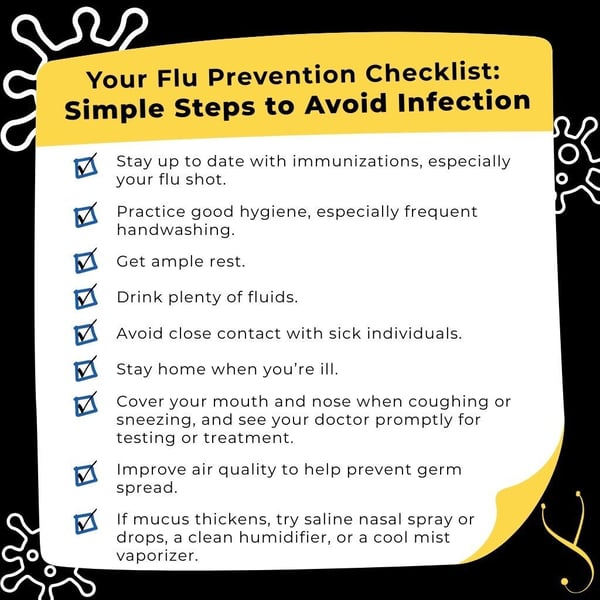
Follow the CDC’s guidelines to avoid infection or act quickly if you feel sick:
- Stay up to date with immunizations, especially your flu shot.
- Practice good hygiene, especially frequent handwashing.
- Get ample rest.
- Drink plenty of fluids.
- Avoid close contact with sick individuals.
- Stay home when you’re ill.
- Cover your mouth and nose when coughing or sneezing, and see your doctor promptly for testing or treatment.
- Improve air quality to help prevent germ spread.
- If mucus thickens, try a saline nasal spray or drops, a clean humidifier, or a cool mist vaporizer.
Still have questions about flu A vs. flu B? Looking for more information on flu vaccines, symptoms, or treatment?
Let’s talk before flu season. We’ve got answers for you.

Topics:
