


“My dad died of cancer, and I’m feeling nervous about it. Am I at risk as well?”
If your parent or other family member succumbed to cancer, you may feel anxious or overwhelmed by the question, “Is cancer hereditary?”
Yet research shows that less than 10% of cancers are caused by inherited genetic mutations. (That number is a bit higher for aggressive breast cancers caused by the BRCA1 and BRCA2 mutations.)
Hereditary cancers typically cause disease by creating proteins (or other chemicals) that don’t function normally in the body. Normal genes act to suppress tumors by repairing damaged DNA, but faulty gene codes can’t do the job they’re meant to do, increasing the odds of tumors forming.
In the case of BRCA, for example, mutated genes don’t make the right protein, so defective DNA isn’t repaired. While this doesn’t guarantee cancer will occur, the risk is decidedly elevated. Faulty BRCA genes predispose a woman to either breast or ovarian cancer, or even both.
Occasionally, genes may also mutate spontaneously, resulting in a genetic mutation that is not inherited from either parent.
Lifestyle factors (smoking, sedentary behavior, excessive alcohol consumption) can damage genes as well. An individual’s exposure to occupational hazards, such as asbestos or chemicals, likewise elevates their risk of certain cancers.
Is Cancer Hereditary With These Red Flags?
So, when it comes to you and your family, is cancer hereditary? What red flags might prompt a serious conversation about your possible genetic risk?
Talk to your doctor if members of your family have experienced:
- One or more cancers diagnosed at a young age
- Several relatives with the same cancer
- The presence of varied, rare, or multiple cancers in any individual’s health history
These scenarios indicate something amiss in a person’s or the family’s genetic makeup that might contribute to cancer.
In these cases, it’s prudent to speak proactively with your primary care doctor to discuss your family history in detail. Your physician can determine if it makes sense to refer you to a genetic counselor for possible genetic testing.
Since hereditary cancers are such a small percentage of all cancer diagnoses, most people don’t require genetic testing. Geneticists apply criteria from the National Comprehensive Cancer Network (NCCN) to define appropriate candidates for genetic counseling.
While costs have decreased substantially, counselors try not to “over-prescribe” testing. Why? Because tests sometimes yield non-actionable information that causes needless anxiety in the patient.
For instance, although pancreatic cancer is a considerable concern for the medical community, it’s tough to screen for. One of my patients had genetic testing done elsewhere that suggested he might be at increased risk for pancreatic cancer. But what do you do with “might”?
Regardless of whether someone has a confirmed genetic mutation or just a strong family history, knowledge is only useful if you can act on it.
Follow the Proper Protocols for You
You’ve heard it before: Never underestimate the benefits of healthy living. When you’re asking ‘is cancer hereditary?’, it’s still essential to maintain good habits: “Eat good, sleep good, play good.”
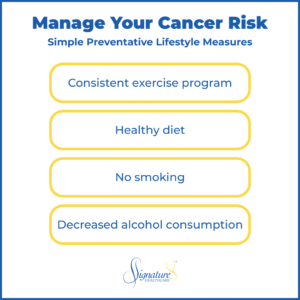
Preventative lifestyle measures (a consistent exercise program, healthy diet, no smoking, decreased alcohol consumption) all help you manage your risk of cancer.
However, it’s also important to consult your primary care doctor regularly and follow the protocols they establish specifically for you. If you’re identified with a genetic mutation, your doctor may adjust cancer screening practices from the standard.
For example:
- If you have an increased risk of colon cancer, the physician may prescribe a colonoscopy every two to three years, rather than the five to 10 years recommended for the general population.
- If you exhibit a mutation that increases your breast cancer risk, the doctor may prescribe alternating screenings every six months: a mammogram in one visit, a breast MRI the next. (If you have a concern about breast cancer, you may also find it helpful to complete the Tyrer-Cuzick breast cancer risk assessment, which reports your tentative risk score based on your personal and family health history.)
Is Cancer Hereditary? Let’s Look at Your Personal Risk
Cancer is one of the leading causes of death in North Carolina, and overall, the state has higher rates of lung cancer and certain other cancers compared to the national average.
But is cancer hereditary? Only in less than one in 10 cases.
At Signature Healthcare, we empower patients with a greater understanding of any potential cancer risk. In concierge practice, this is where our ability to take a high-touch approach really shines through.
To evaluate risk, we sit down with patients to discuss their family history in detail:
- What kind of cancer did your family member(s) have?
- At what age were they diagnosed?
- Did they work at a location (say, in a chemical plant or in a shipyard) that placed them at high risk?
- Did they smoke excessively?
Your answers to these and other questions, along with a review of your personal medical history, help us determine if there are any red flags regarding your own state of health.
Your Signature Healthcare team also remains as informed as possible about your wellness over time and follows new developments in detection and screening that may reduce your and your family’s cancer risk.
Are you wondering, “Is cancer hereditary in my family?” Schedule time with your physician to learn more.
Topics: