

Every Hospital Stay Is Unique.
You may be in for an overnight observation or a procedure with a planned stay of a few days. Perhaps you undergo regular cancer treatment or have a chronic health condition like emphysema that calls for intermittent hospitalization.
Most hospital visits, though, are unplanned, and you may unexpectedly find yourself in the emergency room!
In the former cases, you typically have plenty of time to consider what to pack for a hospital stay. However, in an emergency situation — perhaps with an ambulance on the way — loved ones must often gather your belongings on your behalf without a hospital bag checklist to guide them.
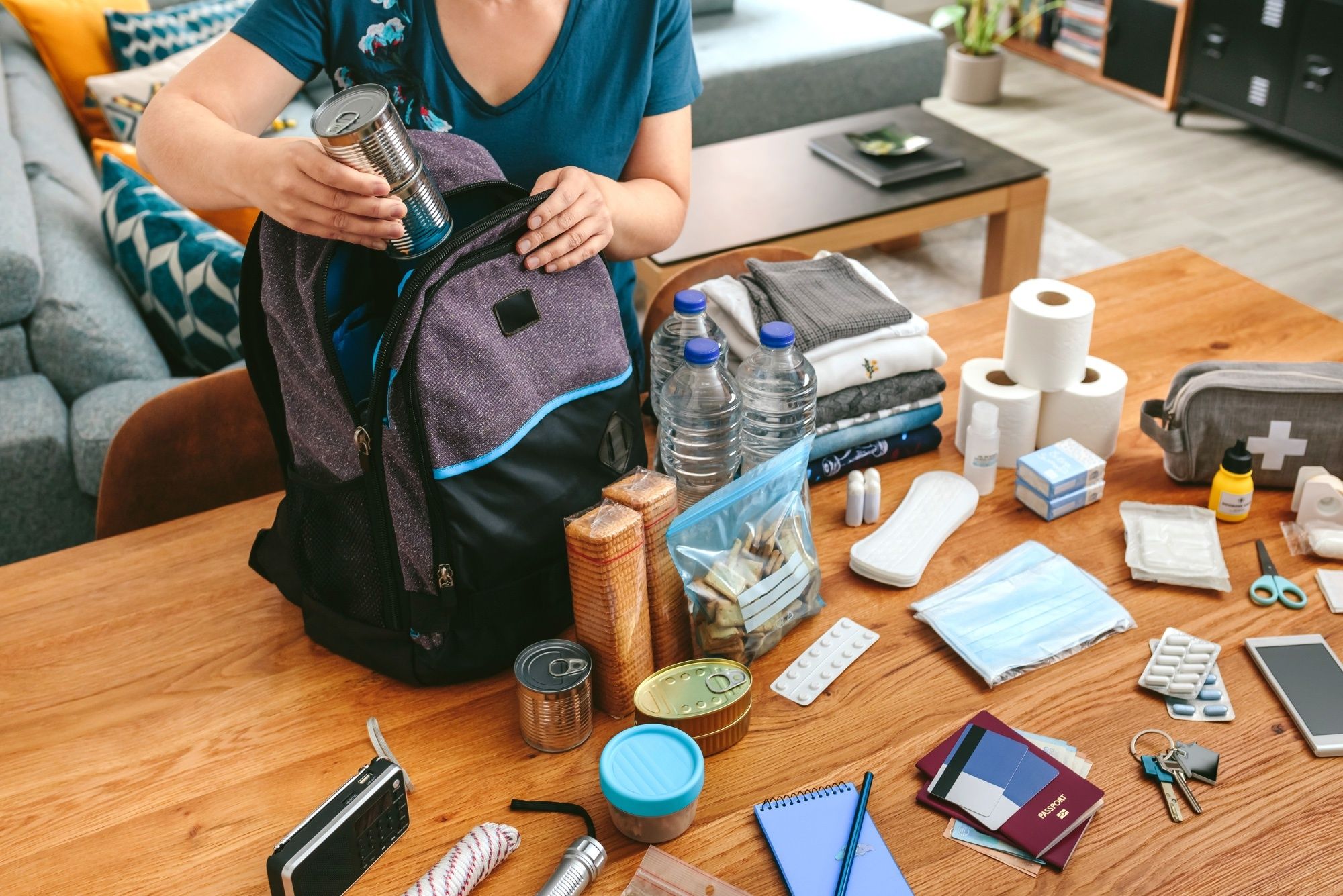
Visiting the hospital under any circumstances is a stressful experience, and you want your stay to proceed as smoothly as possible. In every case, having a simple to-go bag of essential items ready and waiting at home can help.
What to Bring to the Hospital
When considering what to bring to the hospital, think about any necessary papers and documentation, as well as personal items and other essentials to ensure your comfort during your stay.
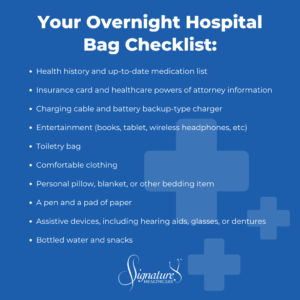
Whether you pack in advance or a friend or family member brings your personal effects, here’s a hospital bag checklist with tips on what to pack for a hospital stay:
Health history and medications
- If you bring nothing else, I recommend bringing a list of your current medications. You might be able to describe what the pill looks like, but that won’t help the hospital staff.At Signature Healthcare, we help manage these situations for our hospitalized patients, ensuring that the hospital’s doctors have access to each patient’s prescription information. However, I may not be completely aware of all the over-the-counter (OTC) medicines or supplements you use.To save time and questions at hospital check-in, have an up-to-date list of every prescription and OTC product you take, ready to present to the attending physician. Many patients keep this list in the Notes app on their phones for speedy reference and sharing.
- I generally create a summary letter after each patient’s annual physical or established care visits, as well as a lab packet with important test results, screenings, and other health measures. I write these letters so that another doctor could glean critical insight into your health history. I recommend bringing these documents with you to the hospital. We at Signature Healthcare also go out of our way to ensure the hospital team has access to our records, but being able to put this information directly into the doctor’s hands can be a crucial time-saver for them.This part of your hospital bag checklist gives your medical team insight into your health history. It indicates whether your current condition is typical for you or a new development and can expedite your treatment and your stay.I can provide these summaries to you in time for your hospital visit. If the stay is sudden, I can share them directly with the hospital from our office.
- If the hospital or health network doesn’t already have your insurance information on file, provide your cards immediately at check-in. This ensures that hospital billing is sent directly to your insurance company rather than to you personally.
- Along with your paperwork, bring accurate information on your healthcare powers of attorney, as well as Do Not Resuscitate (DNR) orders or living wills.
Personal items
Personal comfort boosts overall well-being during a hospital stay, as well as your ability to recover quickly.
Include these familiar items in your hospital bag checklist when preparing for an overnight hospital stay.
- Your cellphone charging cable and an inexpensive battery backup-type charger. You will burn through your phone’s battery calling family with updates or keeping yourself entertained while you’re waiting. Some nursing stations may have charging cables; however, if your battery is dying, it may be challenging to charge your phone in areas like the ER.With access to your personal phone, you can stay connected with family and friends, look up documents and vital information, and alleviate boredom as you recuperate.
- A tablet, plus wireless headphones or noise-blocking earbuds, to read books or watch movies as you recover. Hospital Wi-Fi can be slow. Pre-load your entertainment before your stay so you can access it easily whenever you’re ready to watch or listen.Similarly, a paperback or some magazines can spare you from a dreary afternoon of daytime TV at the hospital. “The Price Is Right” only comes on once per day, and there’s only so much “Maury” a person can watch.
- A toiletry bag is a must on your hospital bag checklist—while the hospital provides basics like toothpaste, a toothbrush, and razors, bringing your preferred products can help you feel more comfortable and at home.
- Comfortable clothing. Exhibitionists might enjoy wandering the halls in a backless hospital gown, but most people like having at least a pair of shorts on underneath. A few of your own T-shirts and gym shorts may help you feel comfortable and more yourself.Also, pack supportive tennis shoes with comfortable socks if you expect to walk the hospital halls, take a treadmill test, or participate in physical therapy after your procedure.
- A special pillow, blanket, or other bedding item that makes you comfortable.However, don’t bring anything that you’re not willing to part with if it gets soiled by blood or other bodily fluids — it may wind up in the hospital’s biohazard bin. Avoid bringing that expensive silk pillowcase or the heirloom afghan your mom crocheted for you.
Other essentials for overnight hospital stay packing
Several other items can make your stay easier and more convenient. These include:
- A pen and a pad of paper. These are handy if you or a family member want to jot down what the physician tells you or keep track of follow-up actions and any questions you have.
- Less common medications. I typically discourage people from bringing their medications to the hospital, but if you take something unusual, then you might want to bring it anyway. Hospitals typically dispense medication from their own supply — their formulary. For instance, if you take Crestor at home, they may substitute Lipitor during your stay, unless there are specific reasons you can’t take it. They can sometimes make an exception, though, especially if they don’t stock anything similar to what you take.However, if you take a less common medication that the hospital may not stock, bring it with you for check-in. Present it to your physician for approval by the hospital pharmacist before using it during your stay.
- Assistive devices, including hearing aids, glasses, or dentures. Absolutely bring these items, but keep careful track of them! Too many dentures or hearing aids have disappeared on a meal tray, never to be seen again. In the event that you’re sedated or profoundly ill in the ICU — arrange with a loved one to secure these items so they’re not lost, accidentally discarded on a meal tray, or left behind on a bedside table.
- Bottled water and snacks. They generally don’t feed people in the ER, and this is somewhat by design. You may need an empty stomach for a procedure or a scan, and eating can delay your care. If you are the patient, you should refrain from eating unless the ER doctor has okayed it. However, if the ER doctor has approved it or you’re sitting with a loved one, then you’ll be glad to have your choice of snack rather than a bland turkey sandwich and miniature ginger ale.
What Not to Bring to the Hospital
- Valuables. Leave your watch, wedding ring, expensive or heirloom jewelry, or large amounts of cash at home. If you happen to arrive with valuables on your person, ask a nurse to lock them up, or have a family member or friend take them home for you. You may be taken out of your room for procedures or tests, and others will have access to it while you’re gone.
- Tobacco and other smoking materials. No smoking of any sort is permitted on hospital grounds.Smoking can worsen your health and that of those around you, so a hospital may discharge a patient against medical advice if they attempt a smoke break.
- Drugs and alcohol. These substances can interact dangerously with hospital-administered medications and can’t be brought on-site.
- Weapons. Hospitals are weapon-free zones. Patients and their visitors must leave any firearms or other items considered weapons at home.
Prepare Your Overnight Hospital Stay Packing List
Any patient entering a medical facility has a certain amount of responsibility to set the stage for their own care. Prepping in advance for your hospital stay, whether anticipated or not, gives you a head start toward a smooth visit and a speedy recovery.
Follow your overnight hospital stay packing list to make your stay simple and comfortable. Your Signature Healthcare physician is in your corner to support your hospital visit, too.
Questions about what to bring? Contact us. Let’s make your stay successful.