

For people who’ve struggled for years with excessive weight, GLP-1s are a paradigm shift. Medications like semaglutide and tirzepatide are game-changers in the revolutionary treatment of obesity and type 2 diabetes.
Let’s take a look at tirzepatide vs. semaglutide for weight loss: how each medication works, how they’re alike and different, and when they’re typically prescribed. When comparing semaglutide vs. tirzepatide, it’s important to understand how each option supports long-term weight management.
Semaglutide vs. Tirzepatide: How They Work
Although glucagon-like peptide 1 drugs (GLP-1s) may seem relatively new, they’ve been around for over 15 years, with volumes of data to support their efficacy.
Byetta, the first GLP-1 on the market in 2005, was used to treat diabetes, and other GLP-1s soon followed.
When Ozempic (semaglutide) was approved by the FDA in 2017, doctors quickly realized that diabetic patients who took the drug also lost weight. This spurred interest in the potential of GLP-1s to help patients manage excess pounds.
These developments are important here in Charlotte, where nearly 35% of adults have a Body Mass Index (BMI) of 30 or higher, classifying them as obese. This rate is even higher than the average of 33% for cities listed on the City Health Dashboard.
Today, semaglutide and tirzepatide are often prescribed to aid weight loss. While they’re fundamentally similar medications, they differ slightly in their mechanism of action:
- Wegovy (semaglutide) is a GLP-1 agonist
- Zepbound (tirzepatide) is a dual agonist: GLP-1 + a glucose-dependent insulinotropic polypeptide (GIP)
Both semaglutide and tirzepatide affect the hypothalamus and the hedonic eating centers, the brain’s center of appetite and cravings. Patients who take these medications say:
- They have fewer cravings. Many note decreased craving for sweets, soda, or alcohol.
- They have less appetite. GLP-1s slow the processing of food through the gastrointestinal tract, so a patient feels full more quickly and doesn’t desire as much to eat.
Both semaglutide and tirzepatide reduce insulin resistance and improve insulin sensitivity, critical for patients managing excess weight, blood sugar, and metabolic-associated liver disease.
Semaglutide vs. Tirzepatide: Approved Indications
Here are the main indications the FDA has approved for these brand names.
Semaglutides:
- Ozempic: Diabetes (covered by insurance only for diabetic patients)
- Wegovy:
- Chronic weight management: Approved for adults and children 12+ with obesity or overweight with at least one weight‑related comorbidity.
- Cardiovascular risk reduction: Approved for adults with established cardiovascular disease who are also overweight or obese.
- MASH (metabolic dysfunction‑associated steatohepatitis): Currently under FDA accelerated approval, pending confirmatory trial results.
Tirzepatides:
- Mounjaro: Diabetes
- Zepbound: Chronic weight management in adults (18 and over) and patients with OSA and obesity or overweight
In the next few years, it appears new and improved drugs may be available. One example is a triple agonist (GLP‑1/GIP/glucagon receptor agonist) currently in Phase 2 and 3 trials. Early data are promising: retatrutide, a leading candidate in this class, produced 24.2% average weight loss at 48 weeks in a Phase 2 trial, exceeding results seen with current medications.
Semaglutide vs. Tirzepatide for Weight Loss and Blood Sugar Control
So, if we compare tirzepatide vs. semaglutide for weight loss, how successful are the two at reducing body weight?
Tirzepatide is a bit more effective for weight loss, perhaps thanks to its dual mechanism, GLP-1/GIP. In studies, average weight loss with tirzepatide is slightly over 20% of body weight. With semaglutide, it’s about 16%.
In trials, tirzepatide (Zepbound for weight loss and Mounjaro for diabetes treatment) also reduced A1C better than semaglutide (Wegovy and Ozempic). At its top dose of 15 mg, tirzepatide outperforms semaglutide (with a top dose of 2.4 mg). Current trials are considering the effectiveness, efficacy, tolerance, and safety of a much higher dose of semaglutide: 7.2 milligrams instead of 2.4.
In other studies, semaglutide has been shown to reduce cardiovascular risks. While data is still being collected and reviewed, the SELECT trial demonstrated a 20% relative reduction in major adverse cardiovascular events in patients treated with semaglutide. This corresponds to a 1.5% absolute risk reduction, meaning that for every 67 patients treated, one cardiovascular event was prevented.
The FDA has approved semaglutide to treat cases of obesity with underlying atherosclerotic cardiovascular disease or a history of heart attack. With that weight loss comes lower cholesterol levels and improved blood pressure and blood sugar, all contributing to lower cardiovascular risk. Importantly, the cardiovascular risk reduction was not entirely due to weight loss alone, as it occurred even in patients who failed to lose more than 5% of their body weight.
Semaglutide vs. Tirzepatide: Prescribing and Treatment
If a patient comes to me with hypertension (say, a blood pressure of 150/90), I may ask them about their salt and potassium intake, hydration, exercise, and nutrition. Perhaps working together, we can help them make some lifestyle modifications.
Then, say we follow up in six or eight weeks and the blood pressure is still elevated. It may be time to start managing the condition with medication. The same approach should be considered in those struggling with their weight despite solid attempts at lifestyle modification.
I became board-certified in obesity medicine, and I focus on that specialty because I know how stigmatizing obesity can be. Often, an individual with excess weight may not want to discuss their obesity with a clinician because they have been stigmatized, even by health care providers, throughout their lives.
For years, many were told to eat less and move more. Over time, they may try weight-loss and diet programs or exercise nearly every day, yet still struggle with too many pounds. Many patients who struggle with excess weight have never been offered medication to help.
When a patient consults me with weight-related issues such as diabetes, hypertension, or high cholesterol, it’s critical we plan a careful, specific path toward the weight loss success they’ve been missing.
When I work with patients to encourage weight loss, I first consider any underlying disease processes we need to reduce:
- A patient with mild hypertension may respond favorably to a 5% weight loss, or even slightly less.
- A patient who wants to relieve obstructive sleep apnea and eliminate their CPAP machine may require a 10% or 15% weight loss.
- People with a very high BMI face serious metabolic consequences and require more robust weight loss and consideration for weight-loss surgery or a combined approach.
Other factors that need to be taken into account when considering medication management are coverage and cost, other health conditions, and contraindications. I take all of these into account to make the best choice for a patient and to help ensure that they can continue the medication safely and optimize efficacy.
We have an amazing arsenal of medications today compared to 10 or 15 years ago, including beneficial classes beyond GLP-1s and GLP-1/GIPs, such as Qsymia (phentermine + topiramate), Contrave (naltrexone + bupropion), and metformin. These medications can also be very helpful and may be used instead of a GLP‑1 if they are cost‑prohibitive or contraindicated. Sometimes these medications may align well with a patient’s other health issues as well. For example, bupropion for those with depression.
Semaglutide vs. Tirzepatide: Factors to Monitor
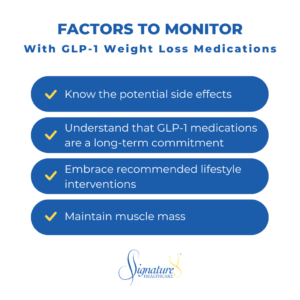
With the use of GLP-1s, GLP-1/GIPs, and other weight loss medications, patients comparing semaglutide vs. tirzepatide should be aware of several important factors:
- Know the potential side effects. Gastrointestinal issues (nausea, vomiting, constipation) can result from the use of both semaglutide and tirzepatide. In my clinical experience, tirzepatide may cause slightly less nausea or constipation, yet may have a slightly higher tendency to cause diarrhea. But these side effects also occur to some degree with semaglutide, without a large enough difference to favor one over the other.
- Understand that GLP-1 medications are a long-term commitment. Stopping them may cause you to regain the weight you lost.
- Embrace recommended lifestyle interventions. To support effective, long-lasting results, I recommend healthy Mediterranean-style nutrition, a regular program of strength training and cardio, good sleep hygiene, and stress reduction.
- Maintain muscle mass. Muscle is a prime metabolic driver, preserving our functional health and protecting against frailty as we age. If your weight loss is too rapid or profound, you may sacrifice muscle mass (sarcopenia), which can lead to a marked decrease in appetite and difficulty consuming enough protein. It’s important to play the long game rather than pursue rapid weight loss. I highly advocate weight training, combined with a higher‑protein diet, as an optimal plan to use these medications safely in parallel with a healthy lifestyle.
Before prescribing, I also make sure you have no contraindications to the particular medication prescribed, such as a history of pancreatitis, a personal or family history of a rare form of thyroid cancer called medullary thyroid cancer, or multiple endocrine neoplasia type 2.
Lastly, for patients with significant high-end metabolic issues, sleep apnea, heart disease, uncontrolled hypertension, or immobility due to high BMI, GLP-1s alone may not be enough. In these cases, a patient’s overall health may benefit from bariatric surgery either before or after GLP-1 treatments start.
Questions About Tirzepatide vs. Semaglutide? Reach Out
If you’re curious about tirzepatide vs. semaglutide for weight loss, your Signature Healthcare physician will help you sift through the research and the hype. Understanding the differences between semaglutide vs. tirzepatide can help you make a more confident, informed decision about your care.
We stay current with the latest studies and developments in weight loss, and we’ll help you find the best path to good health. Get in touch. Let’s discuss!
Topics: